
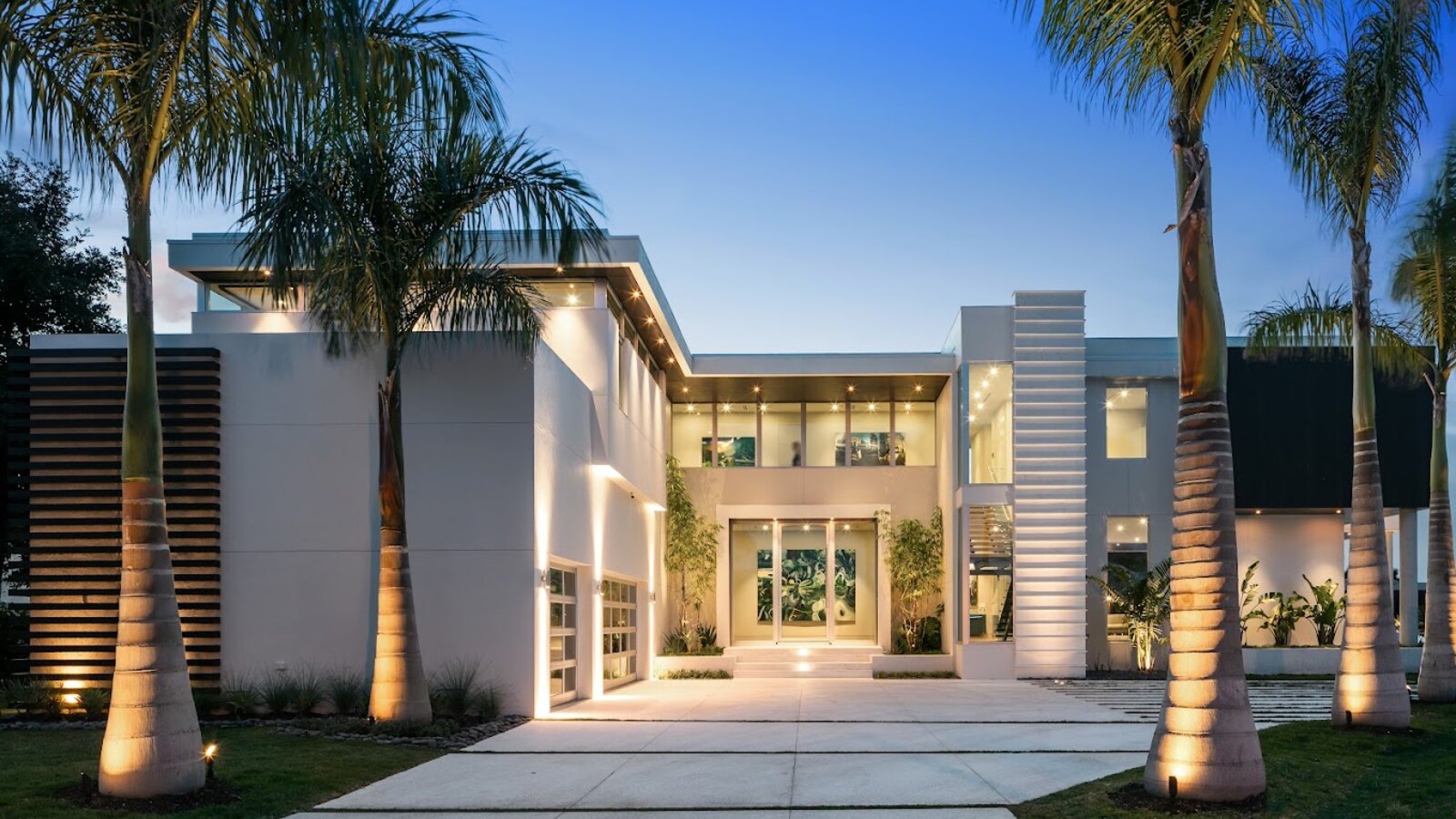
How Cutting Edge Moldings Transforms Luxury Homes in Sarasota

On so much of the new construction here in Sarasota, and in Florida in general, you see incredible trim details on the outside of homes: crown moldings, window surrounds, columns, brackets, and bands that wrap the whole house. I have always wondered where all of that comes from. So for this episode of Why Sarasota, I went behind the scenes at Cutting Edge Moldings, a family-owned Sarasota company that has been making those architectural elements for more than 20 years. Then I met up with Kyle Keitel of Dynan Construction at two finished custom homes to see the products in place.
Who Cutting Edge Moldings Is
Mike Keshishian, the owner, told me they started the company in 2004. What they do is provide architectural elements for the exteriors of residential and commercial buildings. Their customers range from developers and builders to subcontractors, depending on the project.
The company started with foam moldings. As it grew, it added precast. And over the last eight years, Mike said they began importing natural carved limestone from the Middle East for very high-end homes, typically $25 million and up. So today they cover everything from cost-effective foam trim to hand-carved natural stone.
From Architect’s Drawings to Finished Trim
Mike walked me through how a project works. It generally starts with a set of prints. They take the architect’s drawings, do a full takeoff of every architectural element, create CAD drawings, and bid the project. If they win it, they go out and field measure everything. Only then do they start cutting.
That is where the enormous blocks of foam in their shop come in. An AutoCAD program tells the cutting machine exactly what to do, and the machine follows the contour of whatever shape is loaded. That is how they create columns, brackets, crown molding, and more. For precast pieces, they use the same process to cut a mold out of foam, then pour solid concrete into it.
How the Foam Products Are Made to Last
Back in the shop, Mike showed me a dentil piece, the repeating block detail you see on crown molding, being sprayed with a hardener base coat. All of their coated foam products get a base coat, and those coated products are what typically go on homes and commercial buildings. Raw, uncoated foam is usually reserved for trades like pool builders and masons.
Linear pieces, like the bands that wrap around a building or crown molding that runs along a roofline, get meshed for flexural strength so they do not break down over time. Mike explained that they use polypropylene mesh rather than fiberglass, because the alkaline in the base coat does not eat away at polypropylene the way it can with fiberglass.
On commercial jobs, pieces are joined in the field with mesh tape and base coat at the seams, then sprayed with a finish all the way around the building, so there are no visible seams.
Finishes: Wood Grain, Stone, Smooth, and Sand
This was one of my favorite parts of the visit. Mike showed me the different finishes their foam products can take:
- Wood grain. This has grown tremendously over the last few years, Mike said, because the cost of real wood has gone up so much. Once it is installed and painted 15 or 20 feet in the air, it looks just like wood. You would never know the difference.
- Stone or precast look. A foam product finished to look like precast, which can even be done with a grout joint, at a fraction of the price.
- Smooth. Their most popular finish right now, as more contemporary homes are being built.
- Sand. The most popular finish when Mike got into the business, and the most forgiving, but its popularity has definitely gone down.
Paintable Precast for High-Traffic Spots
Matt from Cutting Edge Moldings explained how their precast and hard-coated foam are designed to work hand in hand. A lot of clients choose the hard-coated foam for the window casings, cornice, frieze bands, and everything around the house. Matt said the hard coat is rated at 6,900 PSI, so it is a very strong product.
But around the front door and garage doors, where furniture is going in and out and car doors get opened into the trim, people often want something extra robust. For those spots, they pour the same polymer-modified cement solid all the way through and add fiberglass rebar. The result is a solid, paintable precast piece, and once both are painted, you cannot tell which is which. Matt said he has really never seen anyone else make a paintable precast product.
Precast is also a good fit for balcony edge bands, where builders want water to drain a certain way behind the material.
Natural Stone From Around the World
For the very top of the market, the company carries a full line of natural stone. Matt told me they focus on about 30 different stones from countries all over the world. He handed me a heavy example, an Egyptian stone they call Sinai Azul.
Just like the foam, it starts as a raw block, only these blocks come from a quarry. From there, they can carve almost anything: columns, balusters, window and door surrounds, fountains, fireplaces, pavers, pool coping, and stair treads and risers, covering both the vertical architectural elements and the flat work.
The same stone can also take different finishes. Cladding on the house might be honed or split face, while the flooring in that same stone could be brushed or sandblasted, with whatever edge you like: bullnose, beveled, eased, or sharp.
Indoor-Outdoor Flow
This is a very Florida detail. Outdoor spaces here often flow right into indoor living spaces, so people want the same material throughout. Matt said they can make two-inch-thick pool coping, inch-and-a-quarter exterior pavers on the lanai, and three-quarter-inch interior tile, all in the same stone, so it flows together across the different elevations the builder is working with.
Fireplaces and Custom Carving
Fireplaces are a huge part of their stone business. Matt said clients often send him a photo they found on Google Images or Pinterest, and their carvers can replicate the profile and make it fit the home and firebox. They can ship stone anywhere in the country, though out-of-state clients typically need to find their own local installers.
Plan Ahead for Lead Times
If you are building, this part matters. Matt said lead time for natural stone is about four and a half months, give or take, to have material on site. Big projects can involve multiple shipping containers, so they work with the builder and client on a priority list of what should arrive first and second, so no one is waiting on the last container. On a large custom home that takes a year and a half to two years, there is plenty of time if you plan early. If you are just starting to think about a build, my guide to building a custom home in Sarasota and my comparison of building vs. buying are good places to start.
Seeing It in Place With Dynan Construction
Next, I met Kyle Keitel from Dynan Construction at two custom homes featuring Cutting Edge Moldings products.
At the first home, Kyle said Mike’s attention to detail stood out. They worked closely to design architectural brackets that needed to line up with columns ordered from another supplier, going through several versions to make sure everything fit before producing the final pieces.
Kyle explained why they mix materials. Most of the architectural pieces are the coated foam product, but around areas like the front entry, where people will touch the surface, they use solid concrete castings. For the trim up high, foam comes down to cost and speed: Mike can turn around a template piece within a couple of days. It is also easier to install, attaching with a bonding agent, while concrete castings need structural fasteners because of the weight.
One detail surprised me: the stucco goes on before most of the architectural foam. The stucco runs up past where the trim will go, creating a clean line, then the foam is applied, caulked, and painted. On this home, the corbels were painted white and the large brackets a darker brown.
At the second home, Dynan used architectural brackets out to the soffit, a frieze band around the house, and one clever touch: foam panels above the garage doors that mirror the layout of the doors, making the openings look larger than they are. Kyle said the clients loved it. The trim around the windows was also painted differently from the first house to show more depth, proof that the same product can look completely different depending on how it is painted.
A Smart Way to Save
Kyle shared a value-engineering tip I think a lot of people building here will appreciate. When budgets matter, they may put architectural moldings only on the front and back of a home. On the sides, especially with narrow setbacks or zero-lot-line homes, you would have to be looking straight up to see them. Some clients do the whole house anyway, but it is a legitimate way to put your money where people will actually see it.
Why This Matters If You Are Buying or Building
Exterior trim is one of the biggest things that separates a plain box from a home with real curb appeal, and it is a big part of the look you see across Sarasota’s newer luxury homes. Knowing what it is made of also helps when you are shopping. Coated foam, precast, and natural stone each have different costs, weights, and durability, and asking your builder or inspector which was used, and how it was installed, is a smart question on any home with significant exterior detail. For more on high-end construction here, see my look at a one-of-a-kind luxury build on Longboat Key and my visit with Wicked Smart Homes on the technology side.
Check Them Out
A big thank you to Mike, Matt, and Kyle for their time and for showing us how these products are made and how they look on real homes. Whether you are considering a brand-new build or an extensive renovation, I encourage you to check out Cutting Edge Moldings, located at 7116 24th Court East in Sarasota.
And if you are thinking about building, buying new construction, or finding a home with the kind of detail you saw in this video, reach out. I would be glad to help. Until the next time, folks, be well.